
Cycle route
Gemerské spojky
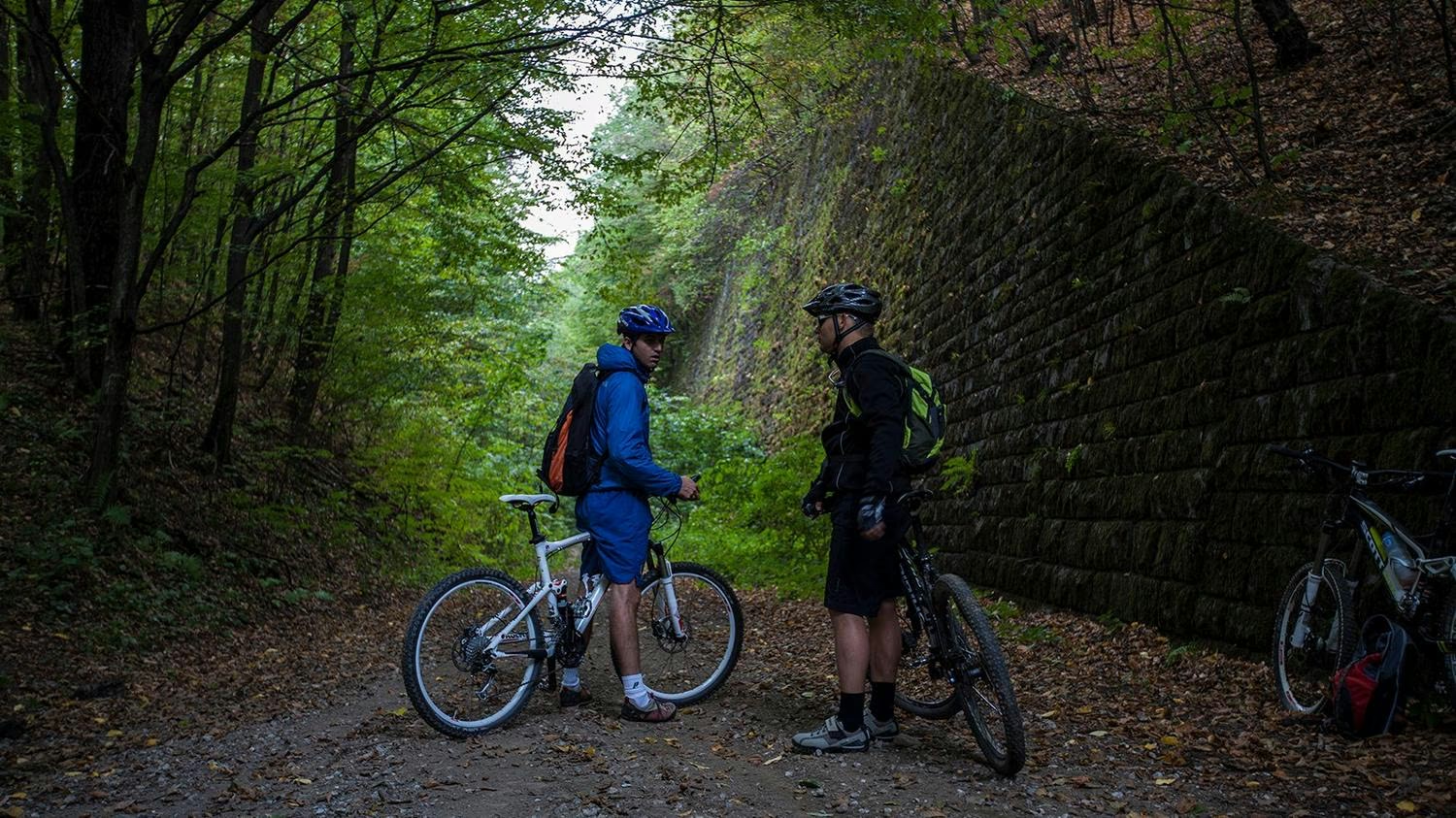
Two railway lines that were meant to connect the valleys of Gemer. Construction began in 1940 and a train never ran on them. What remains are tunnels, a viaduct and kilometres of levelled formation — and we are turning them into a route for people.
The stretch you can already ride
From Revúca to Muránska Lehota along the old railway formation. 8.8 kilometres, about 120 metres of climb spread over the whole length, no cars. From there you can carry on over Prislop to Muráň.
Where you can join
- Za LacaRevúca, the start of the routeNavigate
- Kúpeľná street, by the bridgeRevúca, under a kilometre from the startNavigate
- The descent to Dlhá Lúka through the tunnelMuránska Dlhá LúkaNavigate
- Muránska Lehotathe end of the main sectionNavigate
- Muráň over Prislopthe Muráň endNavigate
“Navigate” opens navigation to the starting point.
What the Gemerské spojky are
The name is not ours. It belonged to two railway lines meant to connect the valleys of Gemer — Tisovec with Revúca, and Lubeník with Slavošovce. After the Vienna Award the valleys were left cut off, each running its own way.
Building started in December 1940. Tunnels were driven, embankments raised, bridges concreted. A finished line never came of it — the work was first stopped by the Uprising and the front, and after the war it was never completed.
What is left is what they managed to build: two tunnels over two kilometres long, the Kopráš tunnel, a concrete viaduct 36 metres high, retaining walls, bridge abutments and kilometres of ground levelled flat. Locals call it the štreka.
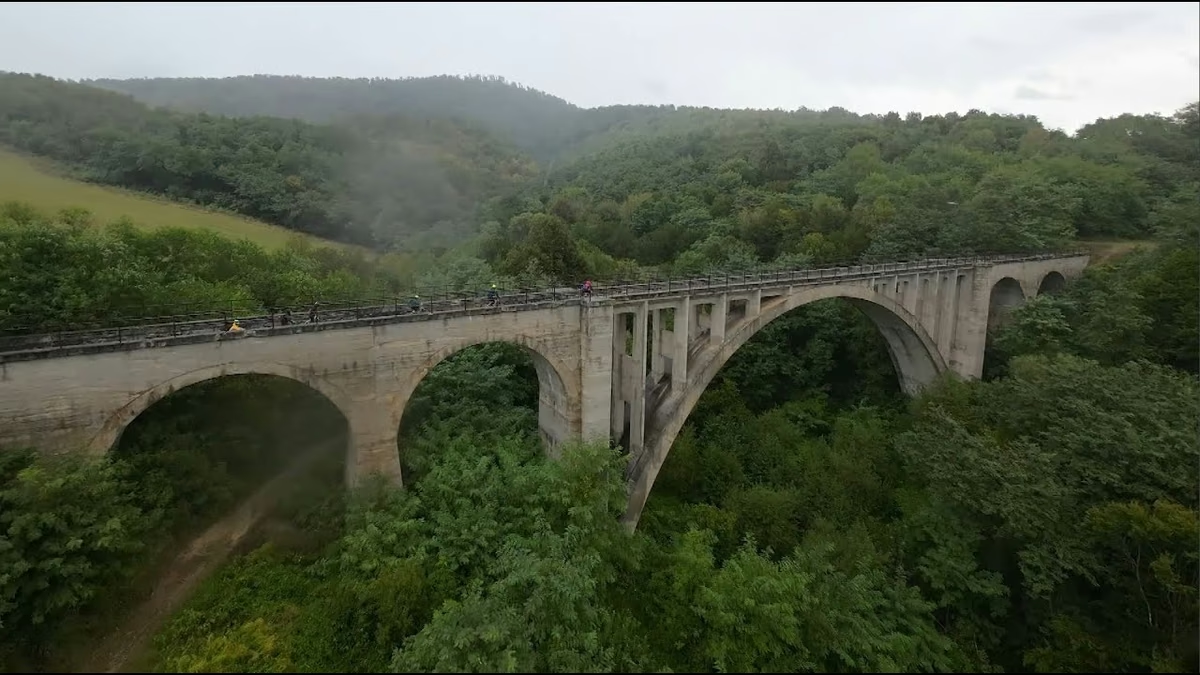
For eighty years a finished line has been lying in this landscape, almost without a climb, following the valley along the river. It only needs finishing in a different way than was first intended.
What we are building from it
On that old formation we are building an easy cycle route. Not a racing one — one you can ride all day, out and back. For walkers, for cyclists, for seniors and for families with children.
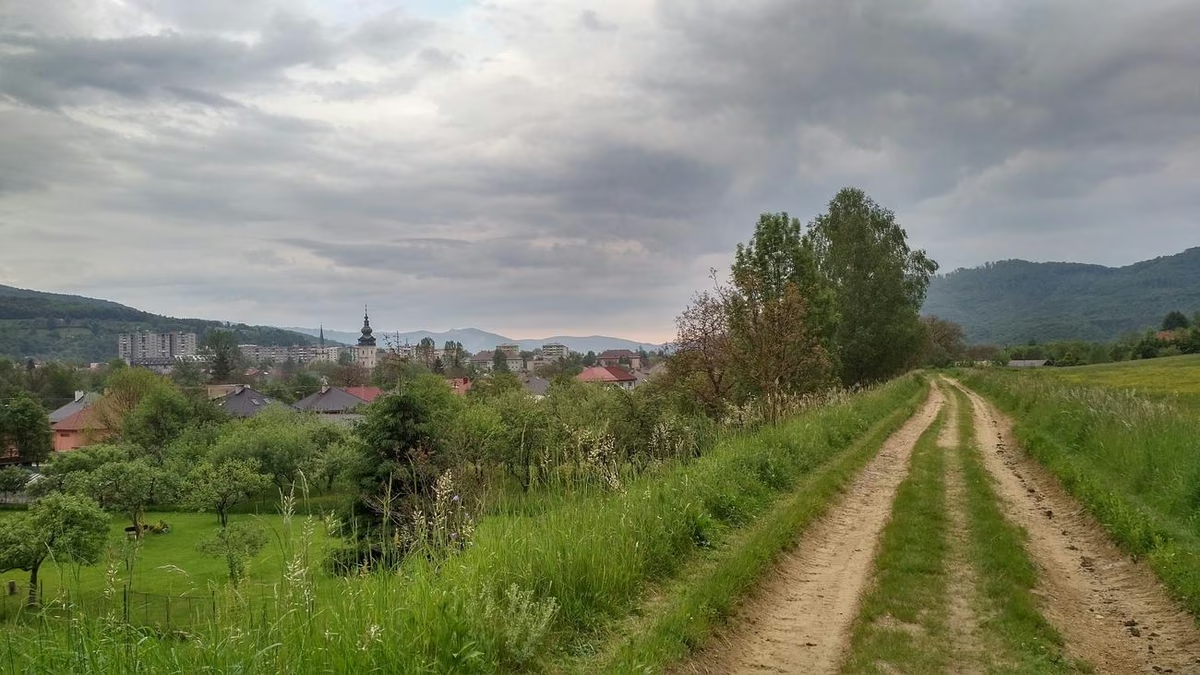
Some sections are passable and people use them. Others are so overgrown that only someone looking for the line will find it. The formation is ploughed up in places, in others a field track runs along it, elsewhere the forest has taken it back.
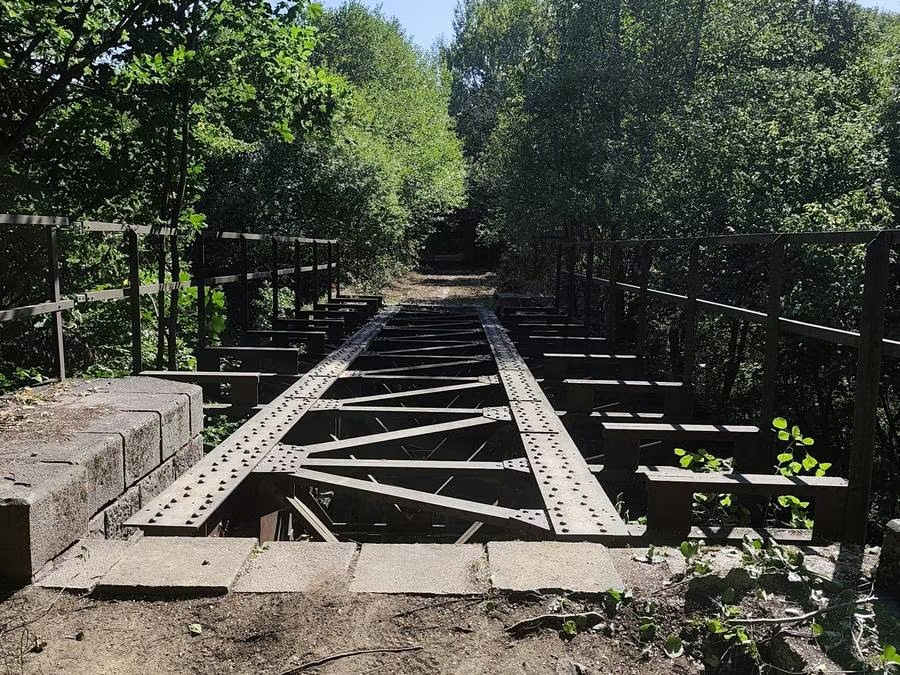
Some of it already serves people. Both the Slavošovce and the Kopráš tunnels are open and a cycle route leads to them. From Revúca the Gemer Green Way, an interpretive trail opened in 2016, follows the formation. But these are separate pieces with no link between them.
We want to make the whole line one continuous surfaced route — four metres wide, free of cars, with a surface a pram and a road bike can both handle.
Who we are building it for
This is not a racing route. It is a road an eight-year-old and an eighty-year-old can both take.
Children and families
No cars, no climbing, a wide surface. A child can ride beside a parent instead of in single file along the edge of a road.
Seniors
Flat ground and a firm surface mean you can go slowly and far. With poles or on an e-bike.
A day out
The route makes sense both ways. Set off from Revúca up towards Muráň or down to the tunnels and come back the way you came — with a different view.
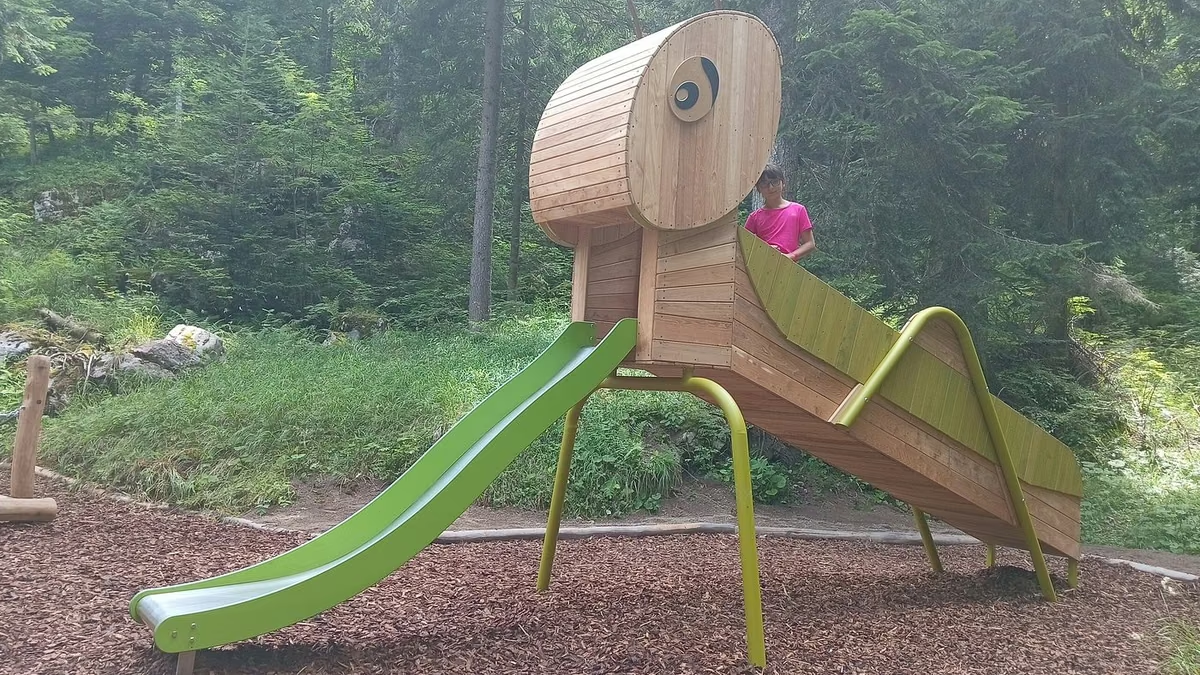
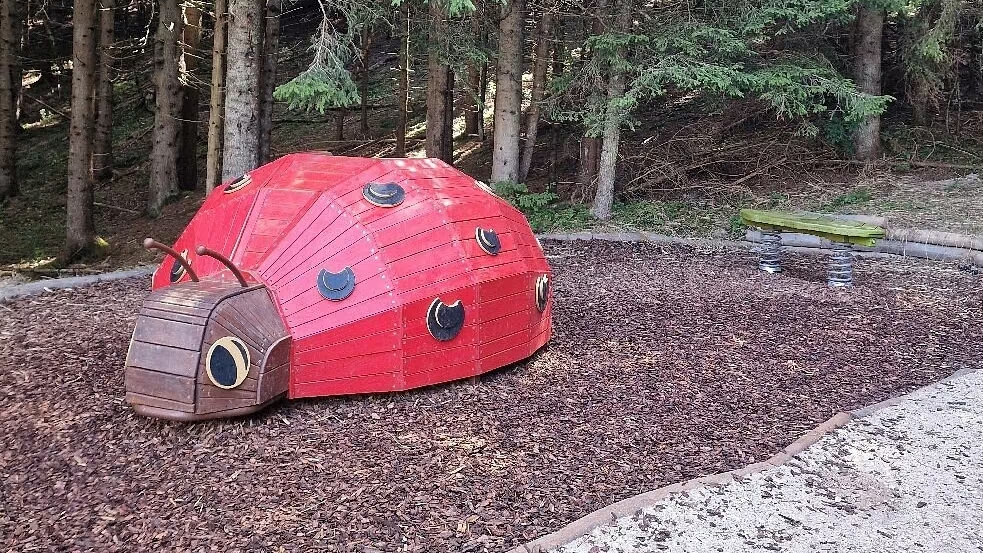
We want more stops like these along the route. For children a reason to go further, for parents a reason to pause.
Where we want to extend it
Muráň and Revúca are already connected. From there we want to extend the route up to Tisovec and the other way down to the Slavošovce tunnel — the way the railway originally intended.
History
Ten years from the decision to the end. A train never ran here once.
2 November 1938 — the arbitration cuts Gemer off
The Vienna Award handed a broad belt of the southern borderland to Hungary. Gemer lost the railway junctions of Jesenské, Rimavská Sobota, Tornaľa and Rožňava. The lines Brezno – Tisovec – Jesenské, Plešivec – Muráň and Plešivec – Slavošovce were left as three isolated pieces, and part of the region could only be reached by train through Hungarian territory. The Slavošovce paper mill, which lived and died by the railway, was left without a connection.
November 1938 — the revolt in the Štítnik valley
The Štítnik valley was cut off not only from the railway but from the road network too. It ended in a revolt.
September 1939 — the decision
The Slovak transport commission decided to build the sections Nižná Slaná – Štítnik, Slavošovce – Lubeník, Muráň – Tisovec and Rimavská Baňa – Kokava nad Rimavicou. The design office for the first three was set up on 4 December 1939 in Brezno.
December 1940 — building started
Of the fifty-eight planned kilometres, two sections were to be handed over on 1 November 1942. Progress was slow — the German Reich was mainly interested in lines that suited it militarily.
1941 — the year of the tunnels
In January the Dielik tunnel was begun, in March the Kopráš one. The latter broke through on 11 August 1941, with a directional deviation of less than a millimetre. The Tisovec tunnel broke through on 26 September 1941 at ten in the morning, with the minister of transport present.
1944 — tunnels finished, building stopped
On 14 March the Tisovec tunnel was completed. In April the Slavošovce tunnel broke through. In August, shortly before the hardest structures were done, the Uprising stopped the work. Partisans buried the Slavošovce mouth of the tunnel so German troops could not pass through — which is why it lies below ground level today.
1948 – 1949 — the definitive end
After the war the borders returned, the original connections were restored and the reason to build the links was gone. Work briefly resumed, but ended at the turn of 1948 and 1949. A continuous line never came about.
What was to be built
- Tisovec – Revúca
- 24 km, 6 tunnels. Started, never finished. It also included rebuilding the rack railway Pohronská Polhora – Tisovec.
- Chyžnianska Voda (today Lubeník) – Slavošovce
- 14 km, 3 tunnels. Started, never finished.
- Štítnik – Nižná Slaná
- 20 km, 5 tunnels. Never got past the design.
- Rimavská Baňa – Kokava nad Rimavicou
- Never got past the intention.
- Dobšiná – Dedinky
- Never got past the intention.
For eighty years since, a finished line has lain in this landscape. The tunnels, the viaduct and kilometres of levelled formation are still standing — nothing has ever run on them.
Structures along the line
What still stands from the original works, from Tisovec to Slavošovce. We want to use every one of them for the cycle route.
- Tisovec tunnel
- The only tunnel of the links that was fully completed. It runs through the Kášterec massif just beyond Tisovec station. It broke through on 26 September 1941 and was finished on 14 March 1944. Its length is given as 770 metres.
- Dielik tunnel
- 2,003 metres, under the saddle between Tisovec and Muráň; it held the highest point of the whole line. Driving began in January 1941. Closed today — one mouth is barred, the other flooded. It has been a protected site since 1997, with bats hibernating inside.
- Retaining wall in Revúca
- A stone wall about 15 metres high and 100 metres long, roughly a kilometre from the Revúca spa towards Muránska Dlhá Lúka.
- The bridges that were never built, between Revúca and Muránska Dlhá Lúka
- Three viaducts of which only the abutments remain, on both sides of the valley. One also has an intermediate pier. The span was never added.
- Kopráš tunnel
- 245 metres, the shortest of the links' tunnels. Driven from March 1941 and broken through on 11 August the same year. The bore is lined with dressed blocks and the Slavošovce portal is of white stone. Today it can be walked without a light.
- Kopráš viaduct
- A reinforced-concrete arch above Magnezitovce, 120 metres long and 36 metres high. It adjoins the Kopráš tunnel on the Mníšany side. It is also called the Mníšany viaduct.
- Slavošovce tunnel
- 2,401 metres, also known as the tunnel under Homôľka. It broke through in April 1944, follows an S-shaped alignment and links Magnezitovce with Slavošovce. The stone for the lining was dressed by masons from Kremnica; some granite blocks weigh two hundred kilograms. Today it is open and a cycle route runs through it.
- Culverts, embankments, smaller walls
- Dozens of smaller structures along the whole formation — culverts, viaduct piers, retaining walls, embankments and cuttings.
All of it is already there. We do not need to draw a new line across the landscape — it is enough to use the one somebody left unfinished.